

EOFY 2026 Australia: Is Your Business Ready for the New Financial Year?
For many Australian business owners, EOFY feels like a race against the clock.
BAS lodgements, payroll finalisation, tax documents, reconciliations, and receipts suddenly become urgent. The pressure builds quickly, and many businesses spend June trying to catch up rather than planning ahead.
But successful businesses view EOFY differently.
They don't see it as just a compliance deadline.
They see it as a financial reset.
The start of the 2026 financial year presents an opportunity to review performance, strengthen systems, improve cash flow visibility, and prepare for sustainable growth.
Businesses that prepare early often enter the new financial year with greater clarity, stronger decision-making, and less operational stress.
EOFY Is About More Than Tax Deductions
One of the biggest mistakes business owners make at EOFY is focusing solely on tax deductions.
While tax planning is important, many businesses still reach June without a clear understanding of:
Profitability
Cash flow position
Profit margins
Operational inefficiencies
Financial risks
Strong sales don't always mean a healthy business.
Revenue does not automatically equal profit.
Rising expenses, poor cash flow timing, underpricing, inventory issues, payroll costs, and growing overheads can quietly erode profits over time.
EOFY is the ideal time to identify these patterns because a full year's financial data tells a much clearer story than isolated monthly reports.
Why Accurate Bookkeeping Matters
Good decisions require reliable numbers.
The process is simple:
Clean bookkeeping → Accurate financial data → Meaningful reports → Better business decisions
Without accurate records, EOFY becomes reactive rather than strategic.
Instead of using financial information to plan growth, business owners spend valuable time fixing errors and chasing missing information.
The Common Trap: Chasing Deductions Over Clarity
One of the most common EOFY mistakes is prioritising tax deductions over financial clarity. Rushing to “buy something to reduce tax” can feel satisfying in the moment but may not support your long-term strategy. A better question is: Does this spend improve profitability, efficiency, or scalability? When you focus first on understanding your numbers – not just your deductions – you make more confident, deliberate decisions about where to invest.
Your EOFY Review Checklist
If you're using cloud accounting software such as Xero or QuickBooks Online, EOFY preparation should include more than simply reconciling bank accounts.
Review the following areas:
✔ Outstanding invoices
✔ Unpaid supplier bills
✔ Payroll reconciliations
✔ STP reporting
✔ Superannuation obligations
✔ GST coding accuracy
✔ Loan balances
✔ Asset purchases
✔ Inventory adjustments
✔ Software integrations
✔ Financial reporting accuracy
Need a Complete EOFY Review Guide?
To make EOFY preparation easier, we've created a Free EOFY Checklist that walks you through the key areas every Australian business should review before the end of the financial year.
The checklist covers:
Bookkeeping reviews
Payroll and STP requirements
BAS preparation
GST checks
Cash flow review
Financial reporting
System and software assessments
👉 Download the Free EOFY Checklist here
Use it as a practical guide to help identify potential issues early, stay compliant, and start the new financial year with greater financial clarity.
Completing these reviews before year-end helps reduce stress and improve financial visibility.
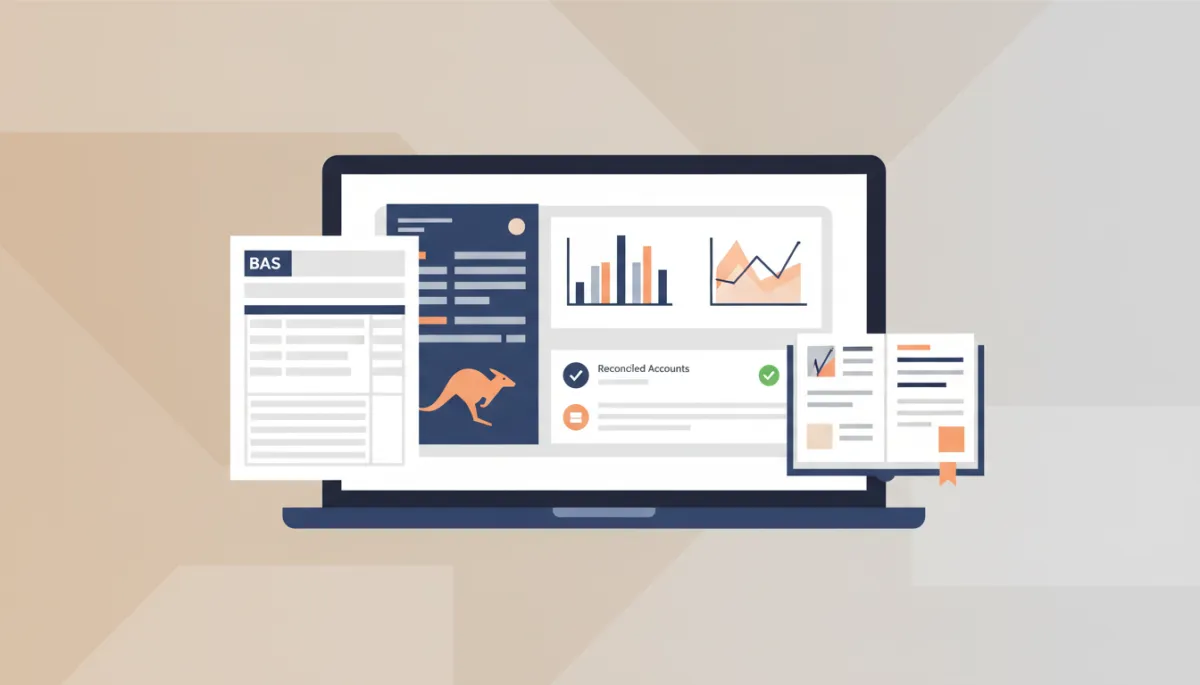
Clear, accurate data turns EOFY from a mad rush into a strategic review.
Increasing ATO Compliance Requirements
The Australian Taxation Office (ATO) continues expanding digital compliance monitoring through:
Single Touch Payroll (STP)
Data matching systems
Electronic reporting requirements
Businesses with inconsistent records, unreconciled accounts, payroll errors, or poor bookkeeping processes often experience unnecessary pressure during EOFY and tax season.
Preparing early can help avoid costly mistakes and compliance issues.
Why Financial Visibility Matters More Than Ever
Many Australian businesses are operating in a higher-cost environment.
Challenges include:
Wage increases
Superannuation changes
Inflation pressures
Rising software costs
Higher financing expenses
Increasing operational overheads
As a result, revenue growth alone is no longer enough.
Business owners must also focus on:
Margin management
Pricing strategy
Cash flow forecasting
Operational efficiency
This is where business owners begin shifting from compliance thinking to financial strategy thinking.
Instead of asking:
"Can my accountant lodge my tax return?"
They begin asking:
Why is profit lower despite higher sales?
Can we afford to hire?
Where is cash flow leaking?
Which services are most profitable?
Are our systems scalable?
Do we have visibility over our numbers?
These are the questions that drive long-term growth.
Is Your Business Ready to Scale?
As businesses grow, administration often grows with them.
Many owners become trapped in:
Manual spreadsheets
Duplicate data entry
Paper receipts
Payroll bottlenecks
Disconnected software
Inefficient approval processes
Over time, these inefficiencies create hidden costs through lost productivity, increased errors, and operational stress.
The new financial year is the perfect time to assess whether your systems can support future growth.
Many Australian businesses are investing in:
Cloud accounting automation
Integrated payroll systems
Expense management software
Inventory integrations
Project tracking tools
Cash flow dashboards
The businesses that scale successfully build systems before chaos arrives—not after.
EOFY Is Also a Pricing Review Opportunity
Many businesses have experienced rising costs over the past few years, including:
Supplier increases
Wage growth
Software subscriptions
Rent increases
General inflation
Yet many business owners still hesitate to increase prices.
The reality is that underpricing often causes more damage than losing a small number of price-sensitive customers.
Poor margins can lead to:
Cash flow pressure
Delayed hiring
Reduced growth opportunities
Increased owner stress
Lower business stability
Healthy Businesses Require Healthy Margins
Profit isn't simply extra money.
Profit funds:
Growth
Staff
Marketing
Systems
Innovation
Cash reserves
Long-term stability
The Question Every Business Owner Should Ask
As the 2026 financial year begins, don't just ask:
"Did we survive this year?"
Ask:
"Do we have the systems, visibility, and financial structure needed to grow next year?"
That question often reveals far more about a business's future.
Free EOFY Business Checklist
To help Australian business owners prepare for the new financial year with greater clarity and confidence, Beyond The Balance Sheet (BTBS) is offering a Free EOFY Business Checklist.
The checklist helps you review:
✔ Bookkeeping
✔ Payroll
✔ BAS preparation
✔ Cash flow visibility
✔ Software systems
✔ Financial records
✔ Compliance requirements
Many businesses only discover financial issues at tax time.
A structured EOFY review helps identify gaps early before they become larger operational or compliance problems.
How BTBS Can Help
At Beyond The Balance Sheet (BTBS), we help Australian businesses prepare for more than just compliance.
Our bookkeeping, tax, and CFO advisory services are designed to help business owners build:
Accurate financial records
Scalable systems
Meaningful reporting
Better decision-making processes
Book a Complimentary Discovery Call
Learn how we can help you build a stronger financial foundation for the 2026 financial year.
Because strong businesses aren't built on guesswork.
They're built on clarity, structure, and informed decision-making.
Download the Free EOFY Checklist Today
Use EOFY as more than a compliance deadline—use it as a launchpad for sustainable and profitable growth.